LC600 VEV
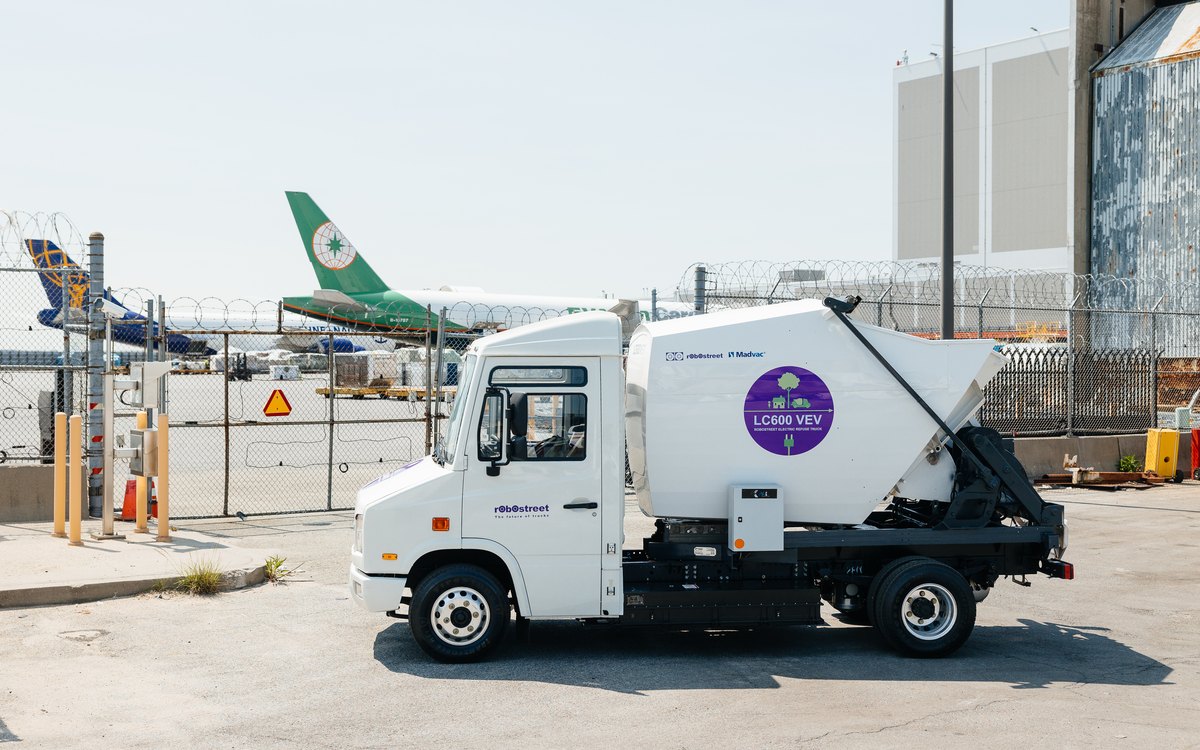
Our first electric refuse truck, put in front of real customers: WasteExpo, JFK Airport, NYC DCAS, and Philadelphia with SEPTA — 6 and 8 cu yd bodies on live municipal routes.
Three core products — one physical platform, one operations brain, one energy & compute backbone — compounding value across the same fleet, the same customer, the same data loop.
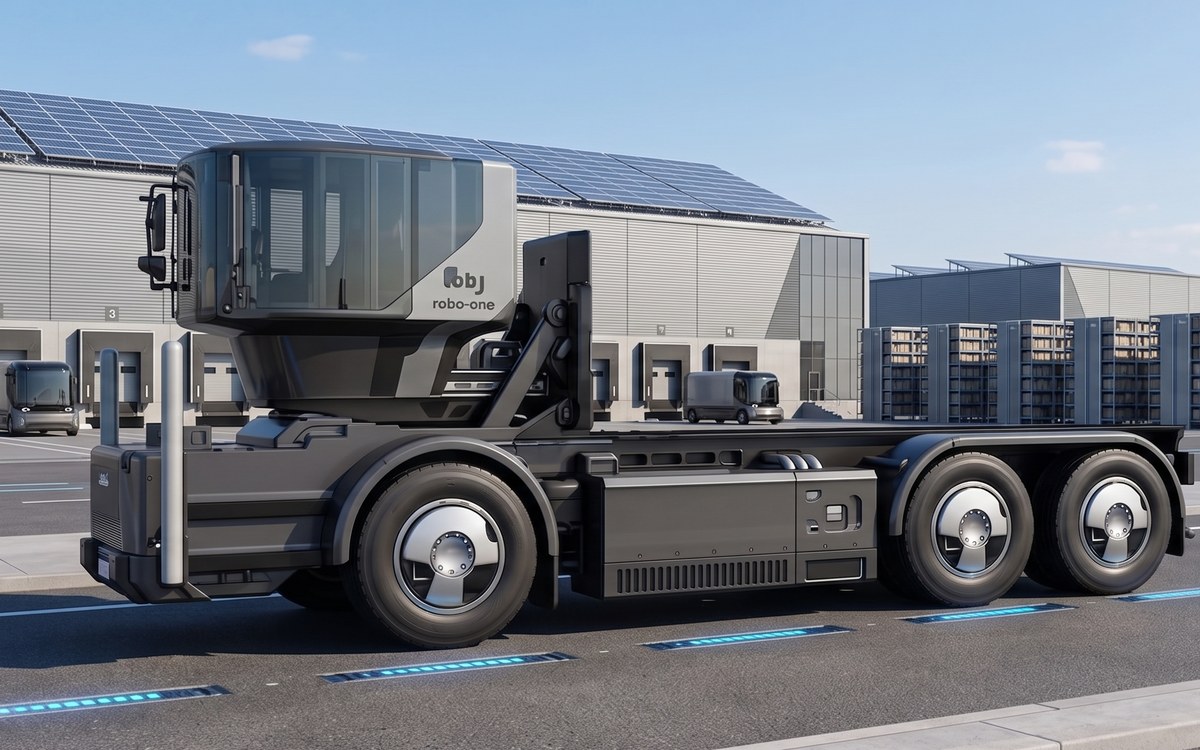
The R1 is a first-of-its-kind robotic work truck: its mobile cab, hidden energy spine, by-wire control and robotic mission interface are RoboStreet's own design, not a badge on somebody else's product. But it did not appear from a blank sheet — three generations of building, delivering and running real electric trucks stand behind it.
Our first electric refuse truck, put in front of real customers: WasteExpo, JFK Airport, NYC DCAS, and Philadelphia with SEPTA — 6 and 8 cu yd bodies on live municipal routes.
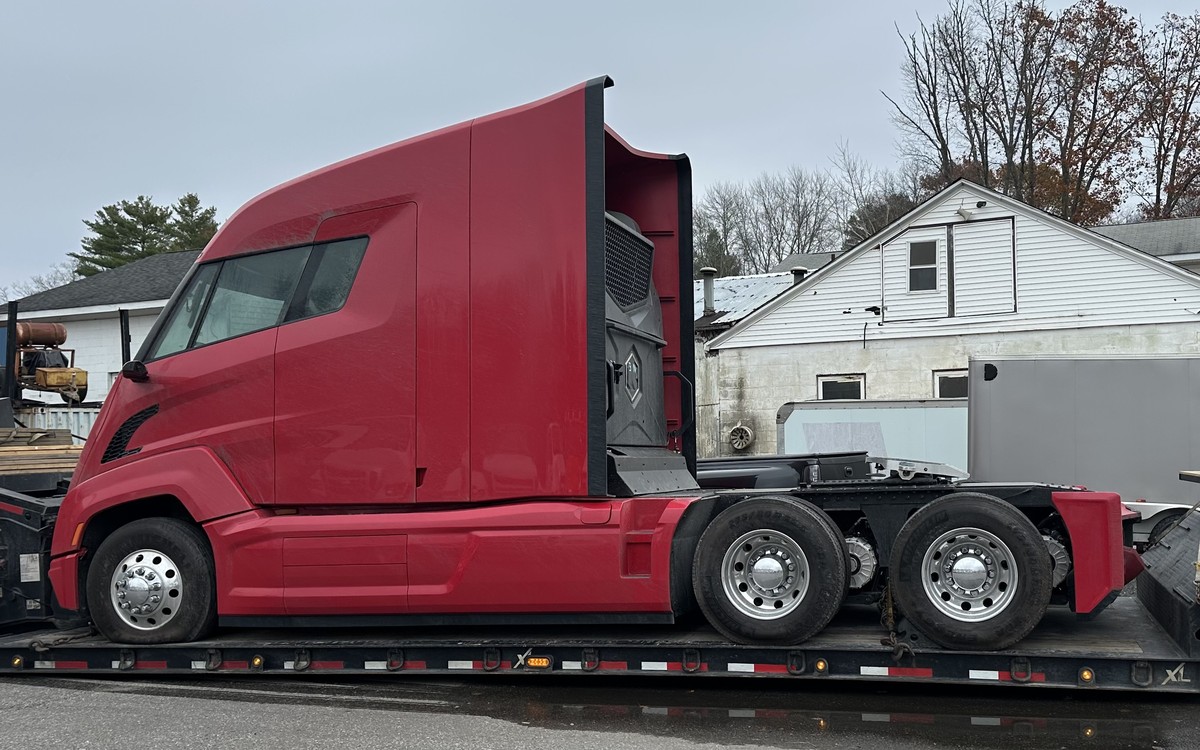
The Class 8 battery-electric platform our first R1 engineering-validation vehicles are built and integrated on — the bridge from light refuse trucks to heavy-duty work.
An original cab-and-chassis, not a conversion: mobile cab, hidden 400/600 kWh LFP energy spine, 800 V architecture, full by-wire, isolated ePTO and a robotic mission interface.
First R1 engineering-validation vehicles are integrated on a Nikola Tre BEV chassis. This describes the early prototype path only — it does not change R1's definition as a RoboStreet original cab-and-chassis vehicle, with its own model configuration, BOM, software versions, test records and applicable-standards matrix.
Point purchases can't solve system problems. Vehicles, software, and depot infrastructure have to evolve together.
Can every vehicle get enough energy for its mission, inside its departure window?
How do you reduce constant cab entry/exit, close-proximity work, and hazard exposure?
Can vehicle motion, manipulator work, and on-site coordination become one system?
Do missions, energy, maintenance, compliance, and remote ops share one trusted source of truth?
The R1 chassis is a robotic mobility platform — not just a truck. Mobile cab, hidden LFP energy spine, full by-wire control, isolated ePTO, and a robotic mission interface give every industry upfit the same physical foundation.
The industry operations system for electric and driverless work fleets. Street AI orchestrates missions, vehicles, people, energy, maintenance, ODD, and the evidence chain into one real-time operational control plane.
Phase 1: make every fleet charge reliably, on schedule, and economically — grid / solar, BESS buffering, high-power charging, and an EMS tuned to shifts, SOC targets, tariffs, and demand caps.
Phase 2: parked vehicles become dual resource nodes — traction batteries feed V2B / V2G, and on-board AI computers join a metered micro AI data center.
Business model: equipment & systems integration · Charging-as-a-Service · Energy management software.
Street AI decides what to do and when. R1 moves and executes safely. TCDC guarantees departures and site resources. One customer × three layers × one data loop = deeper deployments and compounding value.
Primary entry: R1 robotic collection + Street AI service recovery + TCDC fleet charging.
Closed / semi-closed ODD, fixed routes, opportunity charging, site coordination.
Complex mission packs: crew credentials, tools, ePTO, and work-zone safety.
High-utilization depots: zero emission, geofencing, gate / yard, remote supervision.
Reserve the R1 platform for your fleet, or have our team evaluate your depot for TCDC energy & compute infrastructure.
Join the reservation list for the Class 8 electric robotic truck platform. Our team will follow up with configuration and delivery details.
Your email client should open with a pre-filled message to our team.
If not, write us at i@robo-street.com.
Tell us about your depot and fleet. We'll assess charging, storage, and micro-data-center potential for your site.
Your email client should open with a pre-filled message to our team.
If not, write us at i@robo-street.com.